Home → Fishing & Boating → Fishing → Fishing Report
Fishing Report
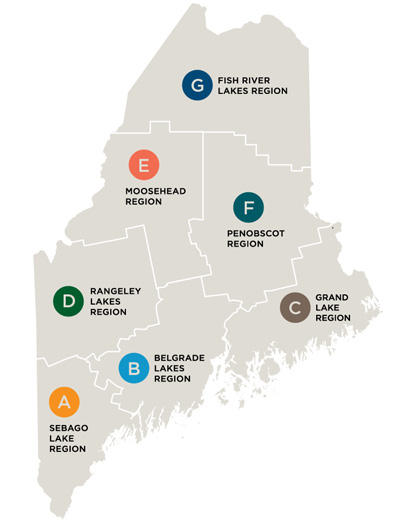
Click the links below for the most up-to-date fishing news and suggestions from Maine's fisheries biologists.
Safety first! Before you head for a day of fishing, ALWAYS tell someone where you are going and when you will return. Please enjoy the Maine outdoors safely and responsibly!
 Sebago Lake Region
From Fisheries Field Biologist, Kent Raymond
Where to fish: The month of June offers a plethora of angling opportunities in southern Maine. Most of our stocking is completed, the bass spawn is finishing up, and the blackflies are out in force! June is peak season for anglers wishing to catch brook trout in small streams across the region. A piece of worm or nightcrawler on a small hook or jig is the most popular method for targeting these fish but artificial lures or flies can also be effective. Brook trout can often be found congregated in deeper pools as the water warms but hung banks and woody debris often hold a few fish. Anglers looking for specific streams to target should consider Branch Brook in Sanford, Tenmile River in Brownfield, Collyer Brook in Gray and Worthley Brook in Poland.
Early in the month, bass anglers can expect to find many fish still on nests – although some have transitioned to post spawn behavior. These nesting fish are well known for their aggressive and territorial nature, often making for very fast fishing.
Fishing tip: It may surprise some to learn just how many of our streams hold good populations of wild brook trout. It may be worthwhile stopping to check out that small brook you drive by every day. If it has sufficient habitat and cold water (summer temps below 68 °F), there is a good chance it holds a population of brook trout, you might find a new secret spot!
Reminders: The riparian habitat around our streams and rivers often produces the shaded moist conditions that ticks thrive in. Make sure to take precautions, use insect repellent, tuck your pants into your socks and be sure to check frequently for ticks.
 Belgrade Lakes Region
From Fisheries Resource Supervisor, Jason Seiders 5/26/2026
Stocked Trout Streams: I mention these streams frequently because they offer a great chance to catch some trout and you don't need to drive for hours. We stock these streams regularly with brook trout and some with brown trout. Fishing has been excellent in these streams lately and as long as the water doesn't get too warm in June, these streams and rivers should remain trouty, with good access at most road crossing locations.
- Messalonskee Stream (Oakland, Waterville)
- St. George River
- Nezinscot River (Turner)
- Medomak River
- Goose River (Swanville)
Kennebec River (Forks and Bingham): June is a great month to fish almost any section of the Kennebec River, depending on the fish you're looking for. Bingham and The Forks offer great fishing for landlocked salmon and brook trout, and there are several areas to access each river reach. Bingham offers the chance to catch some wild rainbow trout, and some of these fish grow quite large and can give you quite a battle. Both of these sections support populations of invasive smallmouth bass. While we encourage the harvest of bass in these river sections, I assure you there are plenty to catch. Be aware that river flows can fluctuate a great deal in these areas, so you may want to check Safewaters.com before you go. This will give you a better idea of when flows will change at the hydroelectric stations so you can be safer and pick the times and flows you want to fish.
Smallmouth Bass Lakes: Our region of Maine boasts some of the best smallmouth bass fishing you'll ever find. Most of our bass waters produce large numbers of fish, and some produce giants. Many of these lakes grow incredible largemouth bass, too. Below is a list of bass waters around the region where you could expect to have a memorable day, especially in the month of June.
- Belgrade Lakes (Great, Long, and Messalonskee)
- Wassookeag Lake (Dexter)
- Megunticook Lake (Camden)
- Swan Lake (Swanville)
- Great Moose Lake (Hartland)
- China Lake (China)
- Lake George (Canaan)
- Cobbosseecontee Lake (Winthrop, Monmouth)
Fishing in June can be fast and furious because most fish species are very active. It's a great time to get kids interested in fishing because most panfish are super-active and easily caught in June. Evenings are especially good fishing—particularly for white perch. Trout fishing can be the same way. As insect hatches become more frequent and intense, trout will be feeding like crazy during those low-light periods.
 Grand Lake Region
From Fisheries Resource Supervisor, Jake Scoville 5/22/2026
June is the month when, if the stars align, fishing diversity here in the Downeast Region peaks. Warm weather and cool water temperatures make the perfect storm, and there is no shortage of options for anglers looking to fish Downeast.
Where to fish:
Deciding where to fish in June is the toughest decision you'll face. Most rivers and streams should be near prime water temperatures if you are looking to chase stream-dwelling brook trout; ponds are cool enough that fish can be active throughout the water column; and in larger lakes, salmon are still easily targeted.
Rivers and streams: For the first part of June, I'd suggest targeting your favorite trout brook. Check the water temperatures first, but if flows are right, this is when some of the best stream fishing can happen. If you are looking to try a new trout stream, I'd recommend Pleasant River near Deblois, or one of the many tributaries to the Machias River.
Ponds: Insect hatches should be in full swing, and fishing in the Downeast Region's brook trout ponds should be very good throughout the month. As water temperatures increase, just fish deeper, or around dawn and dusk. Ponds I would recommend fishing are Youngs Pond in Otis, Birch Harbor Pond in Winter Harbor, Six Mile Lake in Marshfield, Ledge Pond in Charlotte, West and East Pike Brook Ponds in Deblois, and Witch Hole Pond in Bar Harbor.
Lakes: Anglers trolling for salmon in the Downeast Region's larger lakes have been the highlight of the spring here at our office. Great reports from across the region have been coming in. West Grand Lake is the crown jewel of the region, and the salmon fishing there has been excellent so far this year. Green Lake in Ellsworth has also been fishing really well, in addition to Long Pond on MDI. If you'd like to catch smallmouth bass, there is no shortage of lakes to try in the region: Big Lake in Grand Lake Stream, Cathance Lake in Cooper, Branch Lake in Ellsworth, Meddybemps Lake in Meddybemps, and Pleasant River Lake in Beddington.
Tip:
June is a great month for dry fly fishing, and the typical caddis and mayfly patterns are old reliable staples. But I have found that on many streams full of hungry brook trout, using bigger hopper patterns can be just as effective, if not more so. It makes for some exciting eats!
Reminder:
On June 13th, Friends of Moosehorn National Wildlife Refuge in partnership with Cobscook State Park, MDIFW, and the U.S. Fish and Wildlife Service will host a Kids Fishing Derby. This derby happens annually and is always a great time and an excellent opportunity to bring a child fishing! The derby is located at the Cobscook State Park Pond in Edmunds. For more information, please contact the Friends of Moosehorn National Wildlife Refuge.
 Rangeley Lakes Region
From Fisheries Field Biologist, Tom Dolman 5/27/2026
The black flies are buzzing, sunscreen is in the air, and summer has finally arrived in Maine. June is one of the best times of year to get out on the water. Water temperatures remain cool, insects are hatching, and fish are aggressively feeding, creating excellent fishing opportunities across the Rangeley region. From remote trout ponds to expansive lakes and moving water, the area offers a diverse range of fisheries and something for every angler.
Where to fish:
As water temperatures begin to rise and bugs begin to hatch, targeting small ponds can be very productive. Mountain Dimmick Pond, located in Caratunk, ME (Map 30 in the Gazetteer) receives yearly stocking of brook trout fry, and contains excellent cold-water habitat that remains suitable throughout summer even when air temperatures begin to push into the 80s and 90s. The pond is accessible via a network of logging roads off Route 201. During the last survey, many trout stomachs contained dragonfly larvae, so if nothing else is working for you, try using flies that mimic these aquatic invertebrates. Mountain Dimmick pond is open to general law (north zone) fishing, so other forms of tackle are allowed as well. Consult the lawbook before you go to stay up to date on current regulations.
Anglers looking for larger water and trolling opportunities should consider some of the region's larger lakes. Mooselookmeguntic Lake, the largest heritage water in the state, continues to produce good fishing for wild Brook Trout and Landlocked Salmon throughout the month of June. As lakes warm, surface water separates from colder deep water, forming a thermocline where trout and salmon often feed. Throughout the month, you may find that fish are feeding at different depths, and it may take some experimenting to locate the best depth for your flies and spoons. Trolling spoons such as a Mooselook Wobbler are always a tried-and-true lure on Mooselookmeguntic lake for both brook trout and salmon.
For the more adventurous anglers, the Rangeley region offers some high elevation, hike-in fishing opportunities for those willing to make the trek. The Horns Pond located in Bigelow Preserve is accessible via a series of hiking trails off Stratton Brook Pond Rd. From Esker trailhead, a 4.5-5 mile moderately difficult hike follows the fire warden and horns pond trails up to horns pond. This pond is stocked yearly with Brook Trout fry and offers a backcountry fishing experience. While there is opportunity for shoreline anglers here, bringing a float tube would further increase your odds of finding active fish!
June is also a great time of year to hop around and try new locations. Whether it be lakes, ponds, rivers, or streams, late spring, early summer fishing is one of the best times to be out on the water. With some exploring, you might just find a hidden gem.
Fishing Tips:
Fish are generally more active in the early morning and late evening. Anglers looking to use their time efficiently should aim to fish during the first few daylight hours when the sun comes up, and the last hours of the day as the sun sets. Sometimes it pays to eat an early dinner before you head out, and fish into the evening when other anglers are getting off the water and headed home!
Many fish are aggressively feeding at this time of year. When using lures and flies that mimic baitfish, don't be afraid to try a faster or more aggressive retrieve. This might just entice a fish into taking a bite!
Remember:
Make a plan and be prepared. Always check the weather before a fishing trip and pack accordingly. If you are planning on heading to remote waters, let someone know where you are going and when you plan to be back.
 Moosehead Region
From Fisheries Resource Biologist, Stephen Seeback, 5/20/2026
June in Maine is famously buggy. Black flies swarm thick enough to blot out the sun, and mosquitoes buzz overhead like fighter jets ready to unleash a feeding frenzy. But for anglers willing to endure the onslaught, the reward is some of the year's best fly fishing.
Waters are still fairly cool, with temperatures in the low-to mid-50's in the smaller ponds across the region. As a result, mayfly and caddis hatches have been slow to start. Most of the insect activity has been spotty and will increase with warmer temperatures forecasted for the coming weeks. Once the warmer weather arrives it will be an ideal time to visit your favorite trout pond, as fish will begin feeding actively throughout the day.
In early June, the best action usually comes in mid-morning, once the sun has had a chance to warm the water. By month's end, however, the prime windows shift to sunrise and the final golden hour before dark.
Rather than focusing on any single pond, anglers exploring the Greenville and Jackman region will find countless productive trout waters—more than enough to keep someone busy for a lifetime. With a little research and a willingness to explore, it's hard to go wrong.
June is also one of the best times to pursue bass. During the spawning season, anglers can enjoy exceptional sight-fishing opportunities as bass guard their nests in shallow water.
Sebec Lake remains a favorite destination along the southern edge of the Moosehead Lake Region, offering plenty of bass action along with opportunities to land trophy-sized fish. For families and anglers looking for steady action, Brann's Mill Pond is an excellent choice. While the bass there are generally smaller, the pond provides fast-paced fishing and plenty of pickerel, perch, and sunfish to keep the parent that pulled the short straw busy baiting hooks and releasing fish. A convenient causeway near the boat launch also makes shore fishing easy, especially for anglers tossing worms from the bank. Occasionally, lucky anglers may even be rewarded with a stocked brook trout.
Reminders- The Greenville Fisheries Staff will be operating the trap in the East Outlet Dam staring in mid-June—first scheduled tend will be on June 17th. We typically tend the trap Monday, Wednesday, and Friday around mid-morning. If you're in the area or fishing in the river and spot us on the dam, feel free to stop by and look at the fish. Late June usually brings the largest and most impressive fish, while July tends to feature smaller trout and salmon.
 Penobscot Region
From Fisheries Resource Supervisor, Kevin Gallant
June brings the pesky blackflies and mosquitos, but with that comes the brook trout bite! If you are looking for new places to explore, try Baxter State Park. Here you will find 45 waters on the heritage list, these waters have never been stocked (or not in at least 25 years) and contain a year-round self-sustaining population of brook trout. Some of these include Katahdin Lake (T3R8 WELS), Wassataquoik Lake (T4R10 WELS), and Foss and Knowlton Pond and Kidney Pond (both in T3R10 WELS) just to name a few. We also stock a few ponds in the park that are not able to maintain a wild population. These are Billfish Pond and Frost Pond (both in Trout Brook Township), Celia Pond and Draper Pond (both in T3R10 WELS), and Rocky Pond, Round Pond, and Abol Pond (all in T2R9 WELS). Lower Togue Pond is also stocked with splake. All should provide fast fishing while you feed the blackflies!
If you prefer to target landlocked salmon look to Upper Jo Mary Lake (TA R10 WELS), Deering Lake (Weston) and Seboeis Lake (T4R9 NWP). Seboeis Lake also provides a quality splake fishery.
If you are struggling to catch fish, try changing the color of your lure or fly. Sometimes what is on the end of your line isn't as important as the color. Going from orange to pink or purple can change your day. If something isn't working, don't be afraid to tie on a new color!
We encourage anglers to continue to remove lake trout at Schoodic Lake in Brownville. Currently the regulation is no size or bag limit on lake trout under 23" and you can keep 1 over 23". The reason for this is to bring the lake trout population down and allow the rainbow smelt to rebound. This increase in forage will lead to larger, healthier lake trout and landlocked salmon. We have also wrapped up our Northern pike tagging in the Pushaw drainage. There are now up to 428 tagged fish that could still be swimming in the system or anywhere they have free swim within the Penobscot drainage. If you catch a tagged fish, please be sure to report it.
 Fish River Lakes Region
From Fisheries Resource Biologist, Frank Frost 5/27/2026
June fishing in Aroostook County is shaping up to be a great one after some late May rain and cool temperatures brought our water levels back up close to normal. Early reports from anglers fishing some of our local rivers indicate we have some strong year-classes of older-aged fish. Warmer weather is on tap which will bring on insect hatches and get our favorite sport fishes actively feeding. Combine this with some ideal river flows, this is a great time to float one of northern Maine's larger rivers or streams, two of which are highlighted below. For those looking for a quick trip close to town and who may not have a boat or canoe, there are lots of small ponds and lakes within a short drive of our larger population centers. Two of these are highlighted below as well. As of late May the forecast for the first few days of June is wet which will only extend some excellent conditions for fishing even further into the month. We often tell anglers that the first two weeks of June are the best times to be on the water in northern Maine; we expect this June will be excellent for fishing in northern Maine.
Where to go:
- Aroostook River, Washburn to Presque Isle; public boat launches in each town; wild brook trout and landlocked salmon
- Aroostook River, Caribou to Fort Fairfield; there are three boat launches in these two towns providing for a short (approximately 5 mile) and longer trip (approximately 9 miles); wild brook trout and landlocked salmon
- Arnold Brook Lake, Presque Isle; public launch available on West shore off Niles Road; lots of bank angling starting at launch proceeding north toward outlet; wild and stocked brook trout
- Nadeau Lake, Fort Fairfield; located off Route 1A is a public boat launch and two designated bank fishing areas; wild brook trout
Tips:
If you're fishing Aroostook County rivers in early June, keep an eye on the clock—many insect hatches tend to ramp up around 10am and again near 3pm While insect hatches can occur any time of day, we have observed these time periods to have some extremely large hatches that result in some heavy feeding activity. Combined with our current river flows and water temperatures, anglers should focus on these times for the greatest success this month.
Reminder:
Anglers should be aware that harvest rules in our fisheries are in place to manage populations of fish species. The catch and release ethic has increased dramatically in the past ten years to the point where we, as biologists, find ourselves reminding anglers that it is ok to harvest fish. There are relatively few waters with catch and release practices stipulated in rule, meaning that harvest is allowed on most waters of the State. Anglers should take notice when they see that harvest is allowed and know that in those waters, keeping their catch is perfectly fine.